Does Vitamin C Lose Its Potency

Does Vitamin C Lose Its Potency

Degradation of vitamins, probiotics and other active ingredients caused by exposure to heat, water and sunlight

Ingredients

Vitamins and probiotics (and other active ingredients) can be substantially affected by exposure to heat, water and/or sunlight

The nutritional value of such ingredients can degrade when exposed. Therefore, maintaining the viability (and consistency — along with accurate label claims) of these nutritional components in food and beverage products, from the time of production to the time of consumption, can be challenging.

Although there is a risk of products providing lower levels of vitamin or other nutrients (compared with the promises made on their labels) in some cases, there is also a risk of consumers actually consuming more of certain nutrients than they were aware of, or desired to consume.

Knowing that there will be degradation, some manufacturers "over-fortify" products to exceed label claims by the time the products get to (or sit on) shelves.1

As a result, end-users sometimes consume products with nutritional ingredient levels that actually exceed the claims made on labels. Consuming excessive doses of certain vitamins and other ingredients can be harmful and, at a minimum, they simply deserve accurate and honest labelling of the products they ingest.

Heat destroys vitamins and probiotics

Food and beverage manufacturers rely on a few methods to extend product shelf-life and/or avoid the need for expensive and restrictive cold channel distribution. Pasteurisation has long been used as a common means of killing bacteria in beverage products.

Owing to the acceleration of the natural products movement in the last decade or two, chemical preservatives have been removed from the formulations of many natural products. Doing so makes it incumbent upon the manufacturer to utilise some other means of eliminating bacteria (otherwise known as a "kill step").

The most common methodology is to revert back to the application of extreme heat … even though newer technologies are available.

Nevertheless, heat remains extremely common. And heat harms the potency and effectiveness of a variety of vitamins and other nutrients. Degradation generally starts to occur in foods or beverages exposed to temperatures of greater than 120 °F.

The temperatures used in beverage kill steps range from extended periods at 160–175 °F (certain tunnel pasteurisation processes) to a more common level of around 190–200 °F for hot filling, 180–220 °F for aseptic packaging and up to 240 °F (about 30 degrees hotter than boiling water) for some retort processes. These temperatures can dramatically alter the nutritional content of foods and beverages.

Vitamin C and heat

Vitamin C begins to denature at temperatures as low as 86 °F, according to a study in the International Journal of Scientific and Technology Research.2

The negative effects of heat increase significantly at 140 and even more at 170 °F. In fact, pasteurisation was blamed for the dramatic increase in infantile scurvy in the late 19th century as naturally occurring vitamin C in milk was destroyed by pasteurisation.

The International Journal of Scientific and Technology Research study looked at the effect of heat on different vegetables and measured the percentage of vitamin C lost at 5, 15 and 30 minutes while exposed to constant heat of 140 °F (far less extreme than most pasteurisation methods). The impact is material (Table I). As the authors state: "Vitamin C is water-soluble and, as such, is easily leached into the water and then degraded by heat."

Percentage vitamin C lost during exposure to 140 degree heat

Vitamin drinks and heat

A standard hot-fill process used for many well-known vitamin-enhanced drinks typically heats the fluid to between 194 and 203 °F and then cools it to about 180 degrees before being transferred to a bottle in which cooling continues. The temperatures required to hot-fill are widely believed to be very damaging to vitamins (and even more damaging to probiotics).

Other nutrients and heat

Vitamin C, thiamine (B1) and pantothenic acid are all "sensitive" or "highly sensitive" to damage by heat. Probiotic cultures are even more delicate and cannot live above 120 °F, as with virtually all bacteria and yeast.

For probiotics, the drinks must be taken to market through the cold channel at considerably higher costs or not at all. One popular probiotic-fortified beverage, Kevita (owned by Pepsi) was recently the subject of a class action lawsuit for false labelling claims as any naturally occurring probiotic cultures were all destroyed when the product was pasteurised to extend its shelf-life.

The manufacturer then "adds back" probiotic cultures; but, the plaintiff in the lawsuit claims that doing so, and still calling the product a "kombucha" (or making other related claims), is misleading.3

Probiotics

Within the last decade, probiotics have risen beyond specialty and niche markets to become a mainstream ingredient.4

GanedenBC 30 (the probiotic strain used in all Karma products) was the first strain of Bacillus coagulans for which safety data was published in a peer-reviewed journal.

To deliver health benefits, probiotic bacteria must overcome several challenges present in food processing. Furthermore, ensuring that probiotics remain viable throughout shelf-life is a formidable challenge.

Like this story? Subscribe to Nutraceutical Business Review magazine for incisive analysis, the latest news and expert-written articles from the functional food and drink industries. For more information click here.

Water-induced oxidation and reduced potency

Oxidation in water causes water-soluble vitamins and probiotics to degrade with time. Just as nails rust in damp air and apples turn brown when cut open, water soluble vitamins and probiotics degrade when exposed to water and oxygen.

This happens naturally in the atmosphere but putting the vitamins or probiotics in a water medium facilitates and accelerates the process — sometimes quite significantly.

Vitamin C, also known as ascorbic acid, is an example of a water-soluble vitamin and is common in natural fruits and as a supplement. Vitamin C has been widely studied and, in one paper, was shown to degrade by approximately 50% in 4 weeks in the juice of different fruits.5

Figure 1 shows the concentration of vitamin C in the juice of an orange at 4 °C and at room temperature during the course of 4 weeks. The decrease in concentration during that relatively short timeframe ranges from approximately 50% to 35%.

Notably, as previously referenced, "over-fortifying" by the maximum allowed amount of 15% would not make up for the degradation.

Figure 1: Concentration of vitamin C in fresh orange juice from 0 to 4 weeks

The effects of oxidation are similar on other water-soluble vitamins, such as thiamine (vitamin B1), riboflavin (vitamin B2), niacin (vitamin B3), vitamin B6 (pyridoxine), folate (folic acid), vitamin B12, biotin and pantothenic acid.

Acidity (low pH) causes faster degradation … and many common beverages have pH levels low enough to cause significant degradation. Again, the effect of a typical hydration beverage on a delicate active ingredient such as folic acid is quite significant (Figure 2).

Figure 2: Percentage of folic acid after treatment with UV, acid and alkali

For probiotics, the effects are similar. Probiotics are bacteria and yeast colonies that are believed to have beneficial effects on digestion and other areas.

A study by A. Talwalkar and K. Kailasapathy shows that oxygen proves toxic for probiotic yogurts as follows: "The presence of such an oxygenic environment in yogurt throughout its manufacture and storage is thus believed to negatively affect the extended survival of probiotic bacteria such as L. acidophilus and Bifidobacterium spp.)."6

Water comprises oxygen and facilitates oxidation. Indeed, exposure to oxygen has been suggested as one of the reasons for a loss in probiotic viability. The production and bottling of probiotics products causes damage and oxidative stress to the cultures. Furthermore, heat can destroy such cultures.

Degradation testing and validation

Consumer Labs, an independent consumer testing company, tests the label claims of vitamin and supplement makers. In their most recent diagnosis of vitamin C supplements, the three that failed their label claims all did so with over-concentration. There was too much vitamin C!

There is a common conception that consuming "too much" of a water-soluble vitamin is harmless, but that is not correct. Folic acid is a common, overly consumed vitamin that can cause issues such as diarrhoea, nausea, heartburn and abdominal cramps, according to the Mayo Clinic.

Damage by sunlight

Many vitamins are sensitive to the effect of UV light and, therefore, sunlight. The vitamins most affected include vitamin A, B2 (riboflavin), B6, B12 and folic acid.

Indeed, sport drinks and enhanced waters opt for the clear PET bottle for branding and cost-effectiveness. Exposure to sunlight (in addition to extreme heat) is likely to further impact vitamin degradation in these products, which are unlikely to contain the nutrients they claim to have by the time the consumer is drinking them.

Sign up for your free email newsletter

References

  1. For "naturally occurring" vitamins, such as vitamin C in orange juice, FDA allows meaningful variance; but, for "fortified vitamins" added into products, the level of vitamins contained in the product on the shelf must exceed label claims.
  2. www.ijstr.org/final-print/nov2013/Effect-Of-Heating-On-Vitamin-C-Content-Of-Some-Selected-Vegetables.pdf.
  3. www.bevnet.com/news/2017/kevita-targeted-class-action-suit-authenticity.
  4. www.ganedenprobiotics.com/images/uploads/white_paper_pdfs/beyond_the_dairy_case.pdf.
  5. https://scialert.net/fulltext/?doi=tasr.2009.79.84.
  6. www.ncbi.nlm.nih.gov/pubmed/15055922.

Does Vitamin C Lose Its Potency

Source: https://www.nutraceuticalbusinessreview.com/news/article_page/Degradation_of_vitamins_probiotics_and_other_active_ingredients_caused_by_exposure_to_heat_water_and_sunlight/145924

Share:

Do Oranges Have Vitamin C Or D

Do Oranges Have Vitamin C Or D

Photo Courtesy: The Good Brigade/DigitalVision/Getty Images

Hepatitis is a condition that causes inflammation of your liver. Currently, there are an estimated 6 million people living with hepatitis in the United States, and more than 50,000 people are diagnosed with this disease every year. There are three primary types of hepatitis, and while their symptoms can be similar, they vary largely in the ways they're transmitted. Learning more about each type of hepatitis can help you better understand the condition as a whole.

Hepatitis A is the most easily transmitted of the three viruses. It affects approximately 2,500 people every year in the United States. It typically spreads through feces-contaminated food or water and is found in the feces of people who have the virus. Hepatitis A causes a short-term, acute sickness that most people heal from without treatment. However, it can cause serious illness in some people. This virus is more common in places with underdeveloped sanitation systems.

While doctors can't treat hepatitis A with medication, people who get this virus can manage its symptoms with fluids, rest and good nutrition. There's also a safe and effective vaccine available to protect you against hepatitis A.

What Is Hepatitis B?

Hepatitis B can occur both acutely (meaning it develops quickly and lasts a short time) and chronically (meaning it develops slowly over time and worsens over months or years). According to the Centers for Disease Control and Prevention, up to 2 million people in the United States are chronically affected with hepatitis B. Hepatitis B can be transmitted through sexual activity and exposure to infected blood. It can also be passed from a parent to their newborn child during birth.

Hepatitis B usually causes short-term discomfort that many people recover from completely after about four to eight weeks. However, it can turn into a chronic condition that lasts for years; this is more likely in older adults. Doctors can treat severe chronic hepatitis B with antiviral medications. However, in most cases, treatments focus on proper hydration and nutrition. There's a safe vaccine available to protect you against hepatitis B, too.

What Is Hepatitis C?

Photo Courtesy: BSIP/Getty Images

Approximately 4 million people in the United States are affected with hepatitis C. This form of hepatitis causes a chronic illness in over 50% of people who get this type of the virus. It's the least transmissible of the three viruses and can spread through contact with infected blood.

Hepatitis C occurs more commonly in people who engage in intravenous drug use. If you received a blood transfusion before 1992, you should also get tested for hepatitis C if you haven't previously. Hepatitis C can spread through unprotected sexual intercourse, but this is a less common way to transmit it. While there's no vaccine for chronic hepatitis C, treatments that are available today offer a 95% cure rate.

Chronic hepatitis C can significantly affect how your liver works. It can cause cirrhosis, which means that your normal liver tissue is replaced with scar tissue. It can also cause liver cancer. However, there are medications that can help keep this disease in check. Making lifestyle changes, such as reducing or eliminating alcohol from your diet, can also decrease your chances of experiencing complications. In severe cases, hepatitis C may require a liver transplant.

The varying forms of viral hepatitis affect millions of people in the United States. Chronic hepatitis often has few symptoms in its early stages, so recognizing the associated dangers and getting tested if you've been exposed may save your life. Although there are five types of viral hepatitis, only A, B and C are the forms commonly found in the United States.

Resource Links:

"Hepatitis A, B, and C: Learn the Differences," Immunization Action Coalition

"What's the Difference Between Hepatitis A, B and C?," UNC Health Talk

"The ABCs of Hepatitis," Centers for Disease Control and Prevention

"What's the Difference: Hepatitis B vs Hepatitis C?," Hepatitis B Foundation

MORE FROM SYMPTOMFIND.COM

Do Oranges Have Vitamin C Or D

Source: https://www.symptomfind.com/health/knowing-difference-between-hepatitis-a-b-c?utm_content=params%3Ao%3D740013%26ad%3DdirN%26qo%3DserpIndex

Share:

Compare The Ordinary Vitamin C

Compare The Ordinary Vitamin C

ultimate guide to the ordinary vitamin C products

For an ordinary brand, The Ordinary sure likes to confuse people.

Take their Vitamin C products, for example. They have 8! How the heck are you supposed to pick the right one for you?!

Choose the wrong one and you may end up with a bad case of stinging, an acne flareup, or a gritty texture you don't want anywhere near your skin.

I'm not exaggerating. Each of The Ordinary Vitamin C serums/creams is a good product… for the right skin type. That's why they have so many. They know one size never fits all in skincare and have created as many options as possible to serve everyone.

If you don't know which one will get on better with your skin, don't fret. I've put together this quick guide to The Ordinary Vitamin C products to take the guesswork out of picking the right one for your needs:

But first,

What Is Vitamin C And Why Should You Use it?

Vitamin C is an anti aging superstar. It has several superpowers:

  • It fights the free radicals that cause premature wrinkles
  • It boosts collagen, the protein that keeps skin firm
  • It brightens skin and fades dark spots
  • It boosts sun protection (it does this better when paired with Vitamin E and ferulic acid)

The catch? There's not just one form of Vitamin C. There are a gazillion (I've written a post on the most popular here).

L-Ascorbic Acid, the pure form of Vitamin C, is by far the most powerful and the most effective. It's also the most irritating. It can cause stinging and burning. If you have sensitive skin, don't go anywhere near it.

Its derivatives, like Magnesium Ascorbyl Phosphate and Ascorbyl Glucoside, are gentler and better tolerated even by sensitive skin. But, they're less powerful. They work. You just won't be getting the full potency of Vitamin C. But for some skin types, they're the better choice.

Related: Why You Need To Use A Serum With Vitamin C


Confused about The Ordinary? Click on the image below to subscribe to my newsletter and get "The Ordinary Products Guide" Cheatsheet:


Now that you know why you need to add a Vitamin C product to your skincare routine, let's figure out which one is best for your needs, shall we?

The Ordinary Vitamin C Suspension 30% In Silicone (£5.80)

What form of Vitamin C does it use?:Pure Vitamin C, L-Ascorbic Acid. It gives dramatic results, but is very unstable. The Ordinary fixed that by removing water from the formula. (L-Ascorbic Acid goes bad within weeks when mixed with water).

What's the texture like?: Silky smooth. Vitamin C powder is suspended in the formula like in the original Vitamin C Suspension 23% + HA 2%, but the addition of silicones makes the texture smooth rather than gritty. It also slows down the penetration of Vitamin C into your skin.

Are there any side effects?: Pure Vitamin C can be irritating and sting.

When do you use it?: At night. It may cause piling under sunscreen.

Who is it best for?: Vitamin C veterans who want dramatic and fast results but can't stand gritty textures.

Where to buy it: Asos, Beauty Bay and Cult Beauty

Related: Do Silicones Prevent Other Ingredients From Penetrating Skin?


​To make this serum part of your The Ordinary routine I recommend following my scientist friend's course called Extraordinary Skin With The Ordinary – in it she's teaching you how to design a The Ordinary skincare routine to get makeupless skin you love. Click here to check it out now. (affiliate link)

The Ordinary Skincare Routine - Where to start with The Ordinary skincare

the-ordinary-vitamin-C-suspension-23%-+-ha-spheres-2%

The Ordinary Vitamin C Supension 23% + HA Spheres 2% (£4.90)

What form of Vitamin C does it use?: L-Ascorbic Acid, the pure form of Vitamin C. It's the most effective but the most unstable. To keep it stable, The Ordinary hasn't used any water in this serum.

What's the texture like?: Gritty. It feels like sandpaper. It's NOT pleasant to use. The only way I can use it is by mixing it with a separate hyaluronic acid serum. That dissolves the gritty particles so they don't scratch your skin (no, the hyaluronic acid in this serum isn't enough for that – but it'll hydrate your skin).

Are there any side effects?: It's the most powerful Vitamin C serum from The Ordinary but also the most irritating. If you have sensitive skin, go with one of the derivatives below.

When do you use it?: At night.

Who is it best for?: Vitamin C veterans who want dramatic and fast results and hate silicones

Where to buy it:Asos, Beauty Bay and Cult Beauty

Related: How Can You Tell If Your Vitamin C Serum Has Gone Bad?

Vit C 23% Vit C 30% LAA 100% AA8% + AA 2% AG 12% AT 20% EAA 15% MAP 10%
Texture Heavy & gritty Heavy & smooth Powder Light oil Light serum Light oil Light oil Light cream
Potency Very high High Very high Moderate Moderate Moderate Low Low
Irritation High High High Moderate Low Low Low Low
Best for Vit C pros Vit C pros who want
a smoother texture
DIY fans Fading dark spots All skin types,
esp oily
Dry and mature
skin
I don't recommend it All skin types,
esp sensitive

The Ordinary 100% L-Ascorbic Acid Powder (£4.90)

What form of Vitamin C does it use?:Pure Vitamin C, L-Ascorbic Acid. It's the most effective, but goes bad super quickly when you add it to a product. If you don't like silicones and gritty texture, the only other option to ensure maximum freshness is to add Vitamin C powder directly into your fave serums or moisturisers.

What's the texture like?: It's a powder.

Are there any side effects?: Pure Vitamin C can be irritating and sting.

When do you use it?: Either morning and or night.

Who is it best for?: DYI fans. Women who want to use L-Ascorbic Acid, but don't want to buy an expensive serum every few weeks.

Where to buy it: Beauty Bay, Cult Beauty, and Escentual

Related: Why Making Your Own Vitamin C Serum Isn't A Good Idea

The Ordinary Ascorbic Acid 8% + Alpha Arbutin 2% (£10.00)

What form of Vitamin C does it use?: L-Ascorbic Acid, the pure form of Vitamin C. It's the most effective, but needs to be in a water-free formula to stay stable and effective. The serum also contains Alpha Arbutin, a powerful skin-lightener that can fade away dark spots and discolourations.

What's the texture like?: Light oil.

Are there any side effects?: It has a smaller concentration of Vitamin C, so it's gentler than the other L-Ascorbic Acid products on this list. But if your skin is super sensitive, there's a small chance, this could irritate it.

When do you use it?: Morning and night, after cleansing.

Who is it best for?: Women who want to fade dark spots and hyperpigmentation.

Where to buy it: Beauty Bay, Cult Beauty, and Sephora

Related: The Battle Of The Skin-Lighteners: What Is The Best Alternative To Hydroquinone?

The Ordinary Ascorbyl Glucoside Solution 12% ($8.90)

What form of Vitamin C does it use?: Ascorbyl Glucoside, a water soluble derivative of Vitamin C. It's more stable than pure Vitamin C, but less effective. Its forte is brightening skin, but it fights wrinkles too. It's so popular because it works well in water, allowing for an elegant, smooth texture that's a pleasant to use.

What's the texture like?: A light serum. Out of all The Ordinary Vitamin C products, this one has the best texture. It absorbs quickly, too.

Are there any side effects?: If you have super sensitive skin that doesn't tolerate Vitamin C at all, it may irritate it.

When do you use it?: Morning and evening, after cleansing.

Who is it best for?: Everyone, even sensitive skin, can use it. But, because it absorbs so quickly into your skin, it's ideal for oily skin.

Where to buy it: Asos, Beauty Bay and Cult Beauty

Related: All The Types Of Vitamin C Used In Skincare: Which One Is Better?

The Ordinary Ascorbyl Tetraisopalmitate Solution 20% In Vitamin F (£14.90)

What form of Vitamin C Does It Use?: Ascorbyl Tetraisopalmitate. It's an oil soluble derivative that penetrates skin faster than all other forms of Vitamin C. It's especially good at brightening skin. I've written an entire post about the benefits of Ascorbyl Tetraisopalmitate here.

What's the texture like? It's a lightweight oil. It doesn't feel greasy on the skin. It's runny so be careful when you apply it!

Are there any side effects?: Vitamin F isn't really a vitamin. F stands for fatty acids, a group of ingredients that's super moisturising. That's great for dry skin. But for oily skin? They can clog pores and cause breakouts.

When do you use it?: Morning and/or evening.

Who is it best for? Dry and dehydrated skin types that want to moisturise skin and fight wrinkles at the same time.

Where to buy it: Asos, Beauty Bay and Cult Beauty

Related: The Best Skincare Routine For Dry Skin

The Ordinary Ethylated Ascorbic Acid 15% Solution (£18.00)

What form of Vitamin C does it use?: Ethylated Ascorbic Acid. It's stable than L-Ascorbic Acid, but there's not much research on it. So far, studies show it helps fade away dark spots, but there's no data on how well it works as an antioxidant or collagen-booster.

What's the texture like?: A light oil.

Are there any side effects?: We don't have how effective it is.

When do you use it?: Morning and/or evening, after cleansing.

Who is it best for?: I don't recommend it. If you want to fade dark spots, you're much better off with any of the L-Ascorbic Acid products.

Where to buy it: Asos, Cult Beauty, and Feel Unique

The Ordinary Magnesium Ascorbyl Phosphate 10% (£7.80)

What form of Vitamin C does it use?: Magnesium Ascorbyl Phopshate, a water-soluble derivative. It's less effective than pure Vitamin C but more stable. It's one of the most studied derivates of Vitamin C, so there's quite a lot of research confirming it works. It's particularly good at brightening skin.

What's the texture like?: A light cream.

Are there any side effects?: It's one of the gentlest forms of Vitamin C, but if you have super sensitive skin, it may still irritate it. (I mean, what would NOT irritate super sensitive skin?)

When do you use it?: Morning and evening after water-based serums.

Who is it best for?:Sensitive skin and Vitamin C newbies.

Where to buy it: Asos, Beauty Bay and Cult Beauty

Related: Can You Use A Vitamin C Serum If You Have Sensitive Skin?

VITAMIN C TIPS

High doses of Vitamin C can sting and irritate skin. Start with a derivative three or four times a week and increase frequency gradually.
If your Vitamin C is turning brown, toss it. It doesn't work anymore.
Vitamin C is even more powerful when used with Vitamin E and ferulic acid. Sadly, no The Ordinary product uses this combo. Supplement with a separate antioxidant serum.

The Bottom Line

Choosing the right The Ordinary Vitamin C product for your needs depends on your skin type, the type of Vitamin C it can tolerate and what texture it prefers. If you're a Vitamin C veteran, you can upgrade to pure Vitamin C. Everyone else, stick to a derivative for the time being. Pick the one with the better texture for your skin type and you'll make it a happy bunny.

The Ordinary Vitamin C Supension 23% + HA Spheres 2% Ingredients

Ascorbic Acid, Squalane, Isodecyl Neopentanoate, Isononyl Isononanoate, Coconut Alkanes, Ethylene/Propylene/Styrene Copolymer, Ethylhexyl Palmitate, Silica Dimethyl Silylate, Sodium Hyaluronate, Glucomannan, Coco-Caprylate/Caprate, Butylene/Ethylene/Styrene Copolymer, Acrylates/Ethylhexyl Acrylate Crosspolymer, Trihydroxystearin, BHT.

The Ordinary Vitamin C Suspension 30% In Silicone Ingredients

Dimethicone, Ascorbic Acid, Polysilicone-11, PEG-10 Dimethicone.

The Ordinary Ascorbyl Glucoside Solution 12% Ingredients

Aqua (Water), Coco Caprylate/Caprate, Magnesium Ascorbyl Phosphate, Isodecyl Neopentanoate, Plukenetia Volubilis Seed Oil, Dodecane, Disteardimonium Hectorite, Polyglycerol-3 Diisostearate, Polyglycerol-3 Polyricinoleate, Glycerin, Hexamethyldisiloxane, Terminalia Ferdinandiana Fruit Extract, Tocopherol, Sodium Chloride, Phenoxyethanol, Chlorphenesin.

The Ordinary Ascorbyl Tetraisopalmitate Solution 20% in Vitamin F Ingredients

Coconut Alkanes, Tetrahexyldecyl Ascorbate, Ethyl Linoleate, Coco-Caprylate/Caprate, Simmondsia Chinensis (Jojoba) Seed Oil, Solanum Lycopersicum (Tomato) Fruit Extract, Squalane

The Ordinary Magnesium Ascorbyl Phosphate 10% Ingredients

Aqua (Water), Coco Caprylate/Caprate, Magnesium Ascorbyl Phosphate, Isodecyl Neopentanoate, Plukenetia Volubilis Seed Oil, Dodecane, Disteardimonium Hectorite, Polyglycerol-3 Diisostearate, Polyglycerol-3 Polyricinoleate, Glycerin, Hexamethyldisiloxane, Terminalia Ferdinandiana Fruit Extract, Tocopherol, Sodium Chloride, Phenoxyethanol, Chlorphenesin.

The Ordinary 100% L-Ascorbic Acid Powder Ingredients

Ascorbic Acid

The Ordinary Ascorbic Acid 8% + Alpha Arbutin 2% Ingredients

Propanediol, Ascorbic Acid, Alpha-Arbutin

The Ordinary Ethylated Ascorbic Acid 15% Ingredients

Propanediol, Ethyl Ascorbic Acid.

About Gio

Hi, I'm Gio. I'm a no-nonsense, tell-it-like-it-is skin coach and writer on a mission to help you achieve your best skin day ever - every day. I bust skincare myths and debunk marketing jargon to help you figure out what's worth the splurge and what's best left on the shelf - using science, not hype. I also offer skincare consultations to help you create the best skincare routine for your unique needs.

Compare The Ordinary Vitamin C

Source: https://www.beautifulwithbrains.com/guide-ordinary-vitamin-c-products/

Share:

Can You Take A Multivitamin And Vitamin C Together

Can You Take A Multivitamin And Vitamin C Together

You know the drill: You have a ton of vitamins to take in a day but you're not sure exactly when (or really if) you should take them all. And, while we should always turn to food for our vitamin and mineral intake, sometimes vitamin supplementation can help us fill the gaps in our diet. So here you are with your chosen vitamins (which should be properly prescribed and/or recommended by a medical professional) and you don't know what's the best strategy to take them.

Part of the reason behind the confusion is for some supplements, your absorption level can depend on which ones you are taking together and may also result in adverse interactions, which can be harmful to your health.

More from SheKnows

  • Camila Alves McConaughey's Self-Care Routine Starts 'From the Inside Out'

Here are six vitamin combinations you definitely shouldn't take together.

Magnesium and calcium/multivitamin

Many people like to take magnesium in the evening, as it can promote a sense of calm and supports muscle relaxation. But if you do take magnesium, Erin Stokes, ND, recommends not taking it at the same time as your multivitamin, as it may interfere with the absorption of smaller minerals found in the multivitamin, like iron and zinc. Additionally, she says to refrain from taking calcium, magnesium or zinc together as they will "compete for absorption."

Click here to read the full article.

While Dr. Jaydeep Tripathy says taking calcium and magnesium helps prevent osteoporosis, in order to maximize the benefits, take them two hours apart.

Vitamins D, E and K

"Studies have shown that a person's absorption of Vitamin K may be reduced when other fat-soluble vitamins such as Vitamin E and Vitamin D are taken together," says Dr. Chris Airey, M.D. "It's advised that you take these vitamins at least 2 hours apart to maximize your absorption."

Thankfully, there are no harmful side effects, however Dr. Airey says it's "simply not efficient" to take them together as your body's ability to absorb the vitamins will be reduced if you take them together.

Fish Oil & Gingko Biloba

While omega-3 fish oil supplements are great for heart health and gingko biloba can be used to aid cognitive impairment, according to Dr. Tripathy, both have blood-thinning potentials and "taking both together can increase risk for uncontrollable bleeding or inability to clot."

Copper and zinc

If you are taking copper supplements because of copper deficiency, avoid taking zinc at the same time, says Dr. Airey. "Zinc can help to boost the immune system but can interfere with your body's absorption of copper. If you must take both, take them at least two hours apart."

Signs that you are still dealing with copper deficiency include fatigue, weakness, brittle bones, cold sensitivity and easy bruising.

Iron and Green tea

While green tea isn't a supplement, it is a delicious antioxidant-infused beverage that many of us enjoy for its health benefits. Unfortunately, taking iron supplements along with green tea isn't a great mix.

"Green tea can actually cause iron deficiency if taken in large quantities for longer periods of time," says Dr. Tripathy. "Iron, on the other hand, can decrease the efficacy of green tea."

The solution? Skip green tea on days when you're taking your iron supplement and decrease your weekly consumption.

Vitamin C and B12

According to Dr. Airey, some studies have shown that Vitamin C could break down Vitamin B12 in your digestive tract, reducing your B12 absorption. As a result, he says you want to wait at least two hours before taking Vitamin C with your Vitamin B12.

"Vitamin B12 plays an important role in red blood cell production and the proper functioning of your nervous system, and B12 deficiency can lead to poorer nerve health and affect red blood cell development and function."

While the mixing of supplements can be overwhelming at first, Stokes says the most important aspect of a supplement regimen is to keep it simple, to set yourself up for success. "For example, I always take my multivitamin and turmeric supplements in the morning, and take my magnesium and probiotic in the evening. That's the basic schedule. Depending on the season, I may add in extra zinc and vitamin D3, which I take with lunch. Once you get into a routine, and know what to take when, it just becomes part of your daily habits. It doesn't have to be complicated."

Looking to level-up your post-workout self-care? Check out our favorite recovery essentials.

workout-recovery-essentials-embed

workout-recovery-essentials-embed

Launch Gallery: 8 Underrated Beauty Supplements for Healthier Hair & Skin

Best of SheKnows

  • 14 Baking Soda-Free Natural Deodorants That Won't Irritate Your Sensitive Pits

  • 7 Rheumatoid Arthritis Symptoms Every Woman Should Know About

  • The Best Sex Toys for Couples You Can Buy on Amazon

Sign up for SheKnows' Newsletter.
For the latest news, follow us on
Facebook,
Twitter, and
Instagram.

Can You Take A Multivitamin And Vitamin C Together

Source: https://www.yahoo.com/lifestyle/vitamins-supplements-not-together-151607686.html

Share:

Camu Camu Powder Vitamin C Content

Camu Camu Powder Vitamin C Content

Photo Courtesy: Flashpop/DigitalVision//Getty Images

Whether in the form of a fizzy drink or flavored lozenges, cold and flu preventative supplements almost always highlight vitamin C as one of their key ingredients. So, what's so magical about vitamin C? Also known as ascorbic acid, vitamin C is critical to living healthily. Since the human body cannot spontaneously generate this nutrient, vitamin C must instead be absorbed from outside sources, such as vitamin supplements or foods that are naturally rich in it.

Commonly found in cold and flu preventative supplements, vitamin C strengthens and speeds up immune system functionality. Though research does not indicate that vitamin C intake alone can prevent the onset of cold or flu, adequate daily intake may shorten the duration of an infection or lessen the severity of symptoms.

Photo Courtesy: Catherine Falls Commercial/Moment/Getty Images

Vitamin C is crucial for the maintenance of well being. For example, it plays a role in wound healing and helps maintain many essential body tissues. It also acts as a potent antioxidant and can repair damage from free radicals, which are linked to aging effects, and disease vulnerability. Additionally, vitamin C can also prevent anemia, since it helps the body increase absorption of dietary iron, another vital mineral that the body cannot spontaneously create.

Foods that contain high concentrations of vitamin C have been linked with a lower risk of cardiovascular disease, like heart attack and stroke. Vitamin C can also increase levels of nitric oxide, a compound that widens blood vessels and, in turn, lowers blood pressure. In addition, regular intake of vitamin C, along with other vitamins, has been linked to a decreased risk for developing age-related cataracts, a leading cause of visual impairment in the United States.

Common Sources of Vitamin C

Vitamin C can be easily obtained through the many different foods, including:

Photo Courtesy: Akaradech Pramoonsin/Moment/Getty Images
  • Citrus fruits and juices (orange, grapefruit, lemon, lime and tangerine)
  • Berries
  • Melons
  • Mangoes
  • Kiwi
  • Tomato
  • Broccoli
  • Red peppers
  • Spinach
  • Squash
  • Potatoes

Cooking these foods may result in the loss of some of the vitamin content, so it is ideal to ingest them raw, either whole or juiced. Nowadays, there are also numerous packaged food products, like cereals, that have been enriched and fortified with vitamin C, so that the nutrient can be easily obtained.

Vitamin C may also be labeled as "L-ascorbic acid" in supplement form, and most over-the-counter multivitamins contain the recommended daily amount of the vitamin. While it is a good source when an individual is in need of a vitamin C boost, supplements are not meant to replace a diet rich in naturally derived vitamin C.

What Happens When You Have Too Much — or Too Little — Vitamin C?

Vitamin C is a water-soluble vitamin that can be easily flushed out of the body via urination when it is not needed. Therefore, if the main source of vitamin C is from naturally occurring foods, it is near-impossible for excess vitamin C to produce side effects. However, taking excessive concentrated vitamin C supplements may lead to diarrhea or stomach upset.

Photo Courtesy: Violeta Stoimenova/E+/Getty Images

Since vitamin C-rich foods are so readily available nowadays, symptoms of inadequate vitamin C intake are also rare in the United States. However, malnourished individuals can experience symptoms of vitamin C deficiency over time, including:

  • Weakness
  • Fatigue
  • Anemia
  • Easy bruising
  • Joint pain
  • Skin breakdown
  • Weakened tooth enamel
  • Gum inflammation

Severe vitamin C deficiency is referred to as scurvy. Scurvy can be easily treated with increased dietary or supplemental vitamin C. Since vitamin C is crucial in the detoxification of the body, a lack of vitamin C can compromise the immune system and make an individual more susceptible to diseases and infections. Individuals with insufficient vitamin C may find that it takes longer than usual to recover from a cold or a physical wound.

Daily Dosage Recommendations:

The daily dosage recommendation for vitamin C is different for everyone, depending on factors such as gender, age, lifestyle and current health condition. The recommended daily dosage for vitamin C is at least 75 mg daily for women and 90 mg for men. Since people who are pregnant, breast feeding, smoking or using oral contraceptives have a lower blood level of vitamin C than others, larger doses of vitamin C may be needed to achieve optimal results in these individuals. Those who have prior or current medical conditions may also require bigger or smaller dosage levels, as recommended by their healthcare providers.

Resource Links:

  • "Vitamin C" via MedlinePlus
  • "Vitamin C and Infections" via MDPI
  • "Extra Dose of Vitamin C Based on a Daily Supplementation Shortens the Common Cold: A Meta-Analysis of 9 Randomized Controlled Trials" via Hindawi, BioMed Research International
  • "Vitamin C" via National Institutes of Health
  • "Scurvy" via U.S. Department of Health & Human Services, National Institutes of Health
  • "Dietary intake and blood concentrations of antioxidants and the risk of cardiovascular disease, total cancer, and all-cause mortality: a systematic review and dose-response meta-analysis of prospective studies" via The American Journal of Clinical Nutrition
  • "Dietary vitamin and carotenoid intake and risk of age-related cataract" via The American Journal of Clinical Nutrition
  • "Cardiovascular System" via Department of Anatomy, Seoul National University College of Medicine (via Springer)

MORE FROM SYMPTOMFIND.COM

Camu Camu Powder Vitamin C Content

Source: https://www.symptomfind.com/health/vitamin-c-everything-you-need-to-know?utm_content=params%3Ao%3D740013%26ad%3DdirN%26qo%3DserpIndex

Share:

Best Vitamin C In India

Best Vitamin C In India

Vitamin C is a star ingredient in skincare. It fights pigmentation, brightens & evens out the skin tone, smoothes out fine lines, and gives a better-looking skin with consistent use. No wonders its potent form, packaged in serum, is found in the beauty arsenal of many celebrities and beauty bloggers.

Consider a Vitamin C serum as one of the products that you must have if skincare is serious business for you. And once you find the right one and experience the touted benefits for yourself, it will be hard to skip on it for even a day. To help further, we have curated this detailed list of Vitamin C serums in India with in-depth information so you choose the perfect one for your beauty bag with confidence.

Price Comparison:

  1. O3+ Agelock Vitamin C Serum: Rs.1550/- for 30 ml (Buy here)
  2. Klairs Freshly Juiced Vitamin C Drop Serum: Rs.1550/- for 35 ml (Buy here)
  3. Derma Co. 20% Vitamin C Serum:  Rs.808/- for 20 ml (Buy here)
  4. Dot & Key Glow Reviving Vitamin C Serum:  Rs.836/- for 30 ml (Buy here)
  5. Minimalist Vitamin C Serum: Rs.670/- for 30 ml (Buy here)
  6. Dr Sheth's Amla Vitamin C Serum: Rs.849/- for 20 ml (Buy here)
  7. Kiehls Powerful-Strength Line-Reducing Concentrate: Rs.5600/- for 50 ml (Buy here)
  8. Moms Co Natural Vitamin C Serum:  Rs.489/- for 30 ml (Buy here)
  9. St. Botanica Vitamin C Serum:  Rs.999/- for 20 ml (Buy here)
  10. Himalayan Organics Vitamin C Serum:  Rs.955/- for 30 ml (Buy here)
(Please use the table of contents below to jump straight to your preferred section. This is a lengthy blog)

#1 O3+ Agelock Vitamin C Serum (Winner)
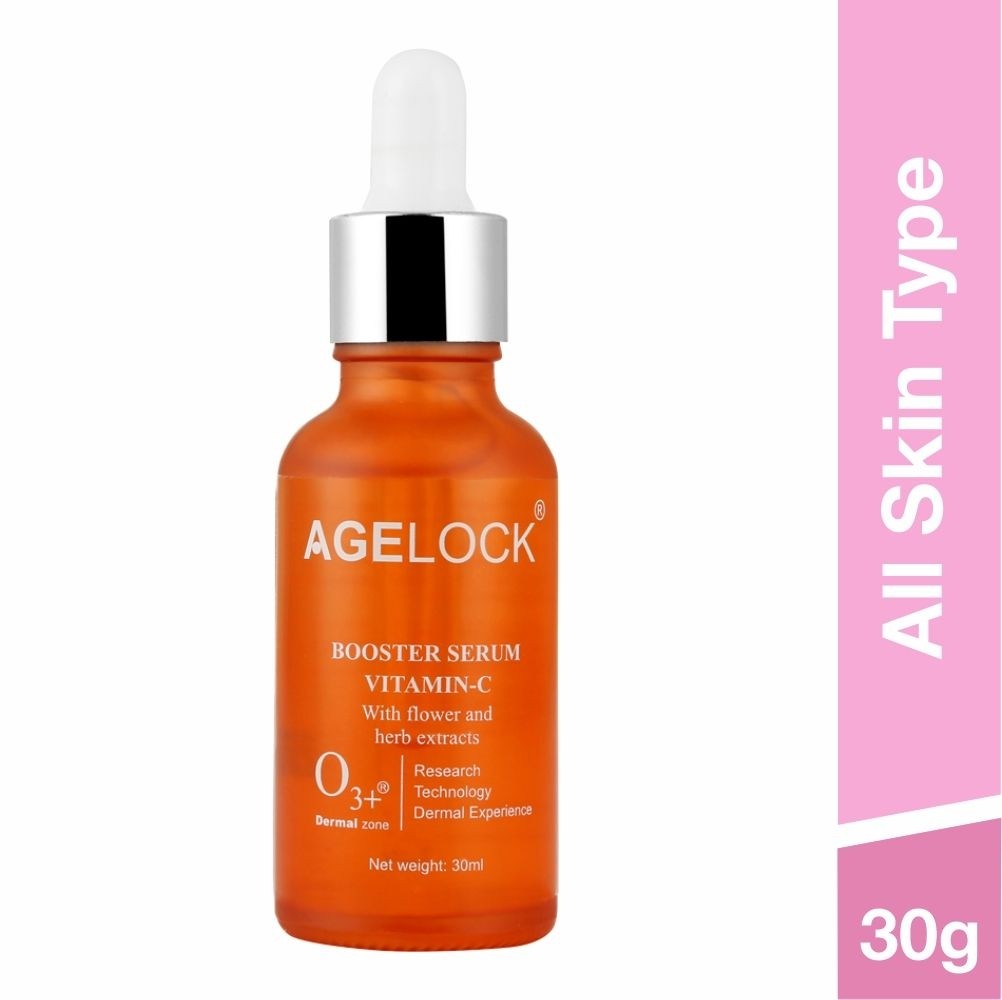
O3+ Agelock Vitamin C serum recommended by dermatoglists in India

If you've come out of a salon looking all fresh & radiant, chances are the parlor lady used O3+ products on your face. With scientifically backed and uniquely formulated products, their skincare range never fails to deliver results. And their Vitamin C Agelock serum range doesn't disappoint either.

Physical Attributes & Quantitative Measurements:

Packed in sturdy, colorful, and pump glass containers, O3+ offers packaging that doesn't let the serum oxidize easily. All the serums in the line have different vitamin concentrations, but the original one has 20% Vitamin C, the highest that any Vitamin C serum in India has. Each bottle has a 30 ml product and is priced in between Rs.1300/- to Rs.2000/-.

Benefits & How It Compares To Others

O3+ is probably the only company on this list, who offers variations in their Vitamin C range. So, if a 20% concentration is too high for you, or you need to tackle some specific skin issues, there is a product to purchase from the lot. Here are 4 variations they offer:

  • Original Agelock Vitamin C Serum (20% Vitamin C)
  • Agelock Vitamin C Plus AHA (5% Vitamin C + 10% AHA), (for open pores & scars)
  • Agelock Vitamin ACE (5% Vitamin C + Vitamin A 0.1% + Vitamin E 1%)
  • Last, Agelock Vitamin C Plus Protein (Vitamin C 5% + Protein 10%)

Their products have evolved to cater to women with specific needs. Doesn't a company working to satisfy niche markets create a striking impression? I duly think so!

Plus, all their facilities are based in India and manufactures products for people here. So, needless to say, it's one of the best Vitamin C serums for Indian skin.

I have had tried a few O3+ products myself, and loved them all! I have also bought their Vitamin C serum from Amazon. It got delivered within 4 days, and I started using it immediately. The product feels lightweight on the skin and the best part, it reduced my pigmentation spots visibly in just a week.

Overall, I'd rate this product a 10/10, primarily because of these three reasons: First, it does what it claims, second, it doesn't irritate the skin, and third, the product has quality ingredients,  as promised.

Purchase on Amazon here.

#2 Klairs Freshly Juiced Vitamin C Drop Serum
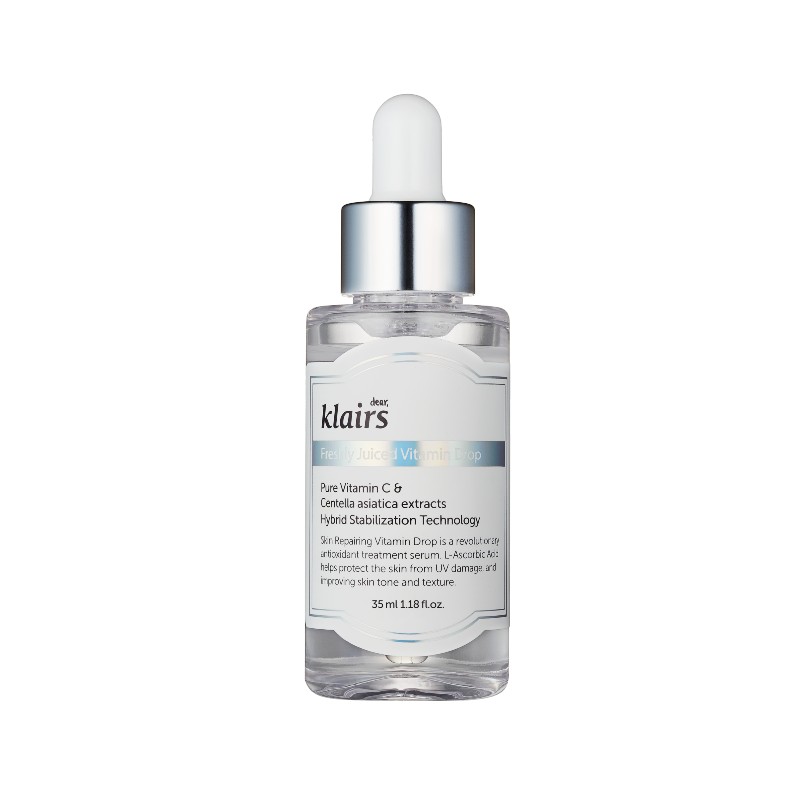
Klairs Freshly Juiced Vitamin C serum

I have a Klairs fan in my friend group, and she just can't get enough of this K-beauty brand. She deems their Vitamin C serum and midnight blue calming cream as the holy grail for acne and its scars. She's right! Because I've seen the results on her skin myself. I ordered their serum soon after, and it was just perfect! Read on for more details and my experience.

Physical Attributes & Quantitative Measurements:

Klairs pack their Vitamin C serum in a pretty clear bottle. Don't worry about the oxidization, because Korean technology has infused Vitamin C in its purest form in the bottle, a.k.a ascorbic acid, which's pretty stable and has a longer shelf life.

Although, I'd still advise you to keep it in the shade, as no matter in what form, Vitamin C tends to lose its color to an ugly orange one easily.

The bottle holds 35 ml of serum and will last you for over two to three months easily. The cost for this Vitamin C serum in India is Rs.1800/-

Benefits & How It Compares To Others

One of the primary benefits is the product based out of Korea. Their skincare game is far ahead of any country in the world, and you can trust the quality of ingredients in their formulations blindly.

The 5% Vitamin C concentration is neither too much nor too little. It's perfect for beginners actually and those with sensitive skin. After application, I feel a warmth on my skin like my skin's loving absorbing the serum, and not getting angry with red patches.

Although, the low concentration can also be considered as a drawback . Because once you're past the beginner level, and want to indulge in higher concentrations, there's no option but to ditch this perfectly curated product.

This serum is also infused with Centella Asiatica extracts, also called Gotu Kala in Hindi, which speeds up skin cell production, boosts antioxidant activity, and boosts collagen synthesis.

I'd like to rate this product 9/10. Minus 1 only because of the lower spectrum of concentration. I accept that in single-digit, Vitamin C can work better for some people, but on the other hand, Klairs can come out with a higher concentration product for those who need it and want to experience drastic benefits. The reviews say the same:

"The texture is velvety & smooth. It doesn't irritate my skin and did lighten dark spots in a week. Although, I feel I can benefit more if the concentration is high" – says a reviewer on Soko Glam.

Nonetheless, the beautiful formulation has no negative reviews whatsoever. All you can read is women raving about the benefits in the form of brighter skin tone, smooth, non-irritating texture, and tackling fine lines. I can vouch for these myself because I experienced the same with using the product.

Purchase on Amazon here.

#3 Derma Co. 20% Vitamin C Serum
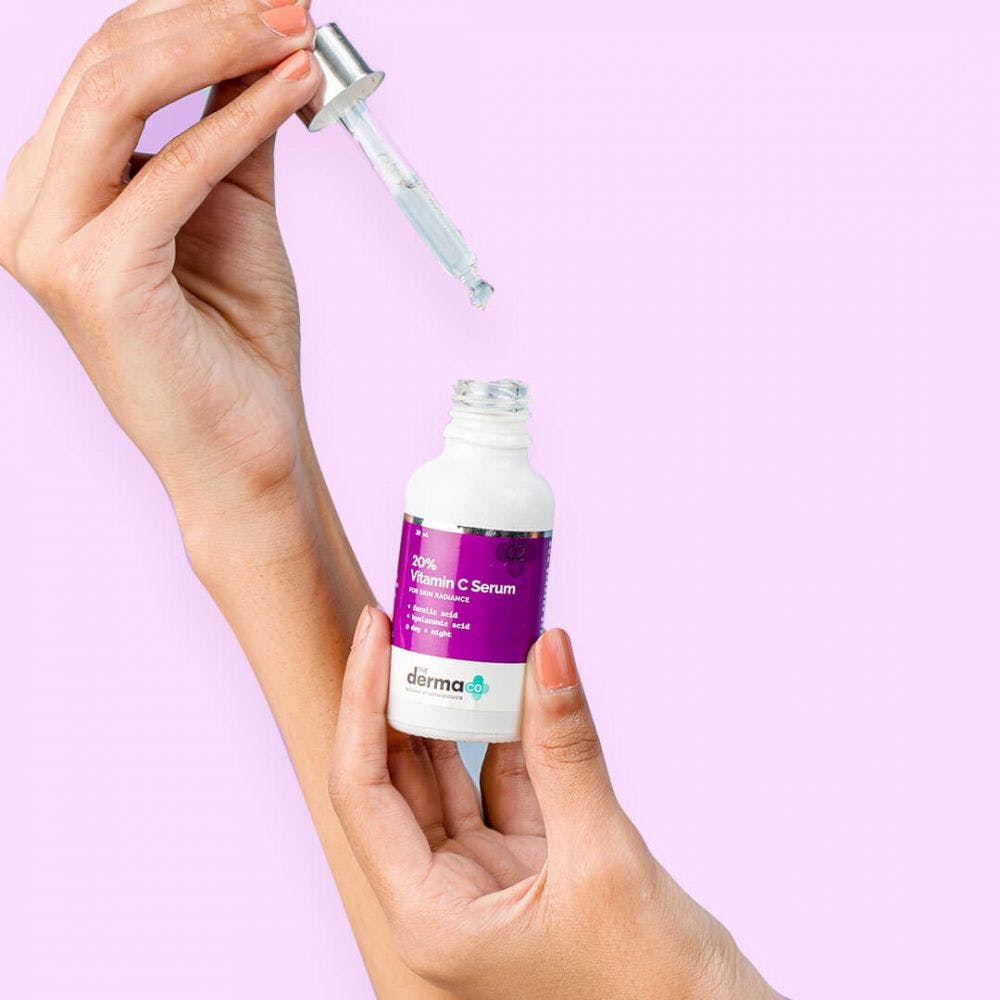
Derma Co Vitamin C serum

I follow a popular beauty columnist and author on Instagram, Vasudha Rai, and it's from her account that I discovered both Derma Co. and Dr. Sheth's products. The latter's Vitamin C serum is reviewed later on the list. Even though I haven't tried their products personally as part of the pandemic safety measures, but have heard some great reviews from the bloggers and on e-commerce stores.

Physical Attributes & Quantitative Measurements:

The serum bottle comes in opaque packaging with a blue label conforming to the company's branding. The main ingredients are all mentioned in bold letters on the packaging – 20% Vitamin C, Ferulic acid, and hyaluronic acid.

The product contains 20 ml liquid and is priced around Rs.750/-. Even though the quantity is lower, so is the price, by the way, it's a great plus owing to the fact Vitamin C serums oxidize over time.

Benefits & How It Compares To Others

Vitamin C in the form of 3-O-Ethyl Ascorbic acid promises stability and deeper penetration into the skin. You'll feel a slight tingling after application, but it's normal because your skin adjusts to the pH.

Apart from Vitamin C, the product is enriched with ferulic acid, hyaluronic acid, and an uncommon but effective ingredient called granactive retinoid. Here's a breakdown of the specialty of each ingredient:

  • The potent and pure form of Vitamin C stops melanin biosynthesis, treats pigmentation, brightens skin, and tackles premature aging.
  • Ferulic acid stabilizes Vitamin C and intensifies its photoprotection and antioxidant properties.
  • Hyaluronic acid retains moisture skin giving it a plump, healthier look. The gooey, oil-like texture of the serum is due to the presence of hyaluronic acid.
  • Granactive retinoid is an advanced form of retinol that gently exfoliates the skin and increases cell turnover.

The powerful, quality ingredients lend the awesome benefits of the product. Here are what some reviews on Amazon say:

"Consistency is perfect and it gets absorbed quickly. My acne scars of 6 years lightened with just a week of use"

"My skin looks so bright after using it, and the uneven skin tone on my upper lips and forehead vanished completely. I'll recommend this product to everyone."

Coming to the drawback, it has a medicinal smell, a very non-pleasant one too. A common issue reported with the product. Lest all is amazing.

And oh, all their products are dermatologist tested and reviewed, given their founders are doctors and skin specialists, that's why the name is Derma Co.

Overall Rating: 9/10

Purchase on Amazon here.

Also See: Where To Buy The Ordinary In India + Their 10 Best (& 5 Worst Products)

#4 Dot & Key Glow Reviving Vitamin C Serum
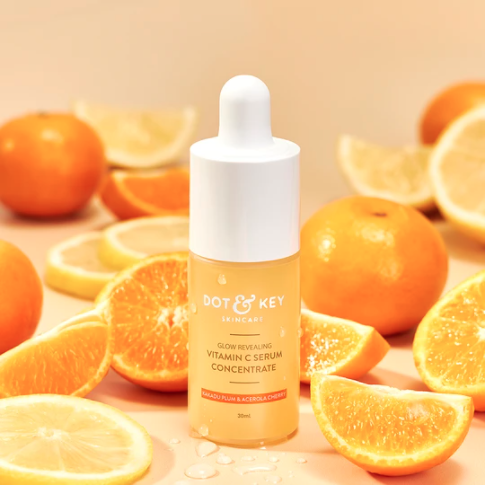
Dot & Key Vitamin C serum in India

This Vitamin C serum concentrate is formulated with naturally occurring ingredients to provide you with the goodness of nature's bounty. The serum's Vitamin C is derived from acerola cherry and Kakadu Plum, the world's richest natural source of the vitamin. And is further mixed with hyaluronic acid, bearberry leaf extract, Vitamin E, and peony root extract to enhance its effectiveness on the skin. Made with advice from skin specialists, this is one of the best vitamin C serums in India recommended by dermatologists.

Physical Attributes & Quantitative Measurements:

Dot & Key packaging is always super-cute and appealing. Their Vitamin C serum comes in a lovely plastic dropper bottle with a lemon yellow shade on the outer side. The serum is clear and you'll have 30 ml of product for around Rs.800/-.

Benefits & How It Compares To Others

First, I'd like to add that the serum is absolutely non-irritating to the skin. Thanks to their sensibly derived approach from nature. Around 4-5 drops are enough to cover your face and it will absorb in hardly 10 seconds.

Second, the product delivers what they say! You'll notice brighter, healthier-looking skin in just a few days. And in a few weeks, the dark spots and premature aging on your face will fade away, like magic!

"I am always selective about my skincare products because I have a lot of acne. But this serum was very gentle and gave a beautiful glow to my skin with the very first use." – says one reviewer on Nykaa.

"My holy grail for winters. It moisturizes the skin so well and keeps it deeply hydrated throughout the day. The first product I tried that mentioned 'glow' in their tagline and delivered it too. Super happy!" – said another reviewer on their website.

Lastly, what impressed me the most about Dot & Key is their environment-friendly approach. All their ingredients are sustainably sourced and don't harm our furry friends or their habitat. Plus, they allow you to send back empty plastic covering of their products for reward points in their store. If you're looking for eco-friendly Indian brands, Dot & Key definitely leads the way.

I noticed two drawbacks with this product. First, the packaging or the company doesn't mention the concentration of Vitamin C or the percentage of any other ingredient. Second, the smell is a little overpowering and might not suit those with overly sensitive skin.

Overall Rating: 8.5/10

Purchase on Amazon here.

#5 Minimalist Vitamin C Serum
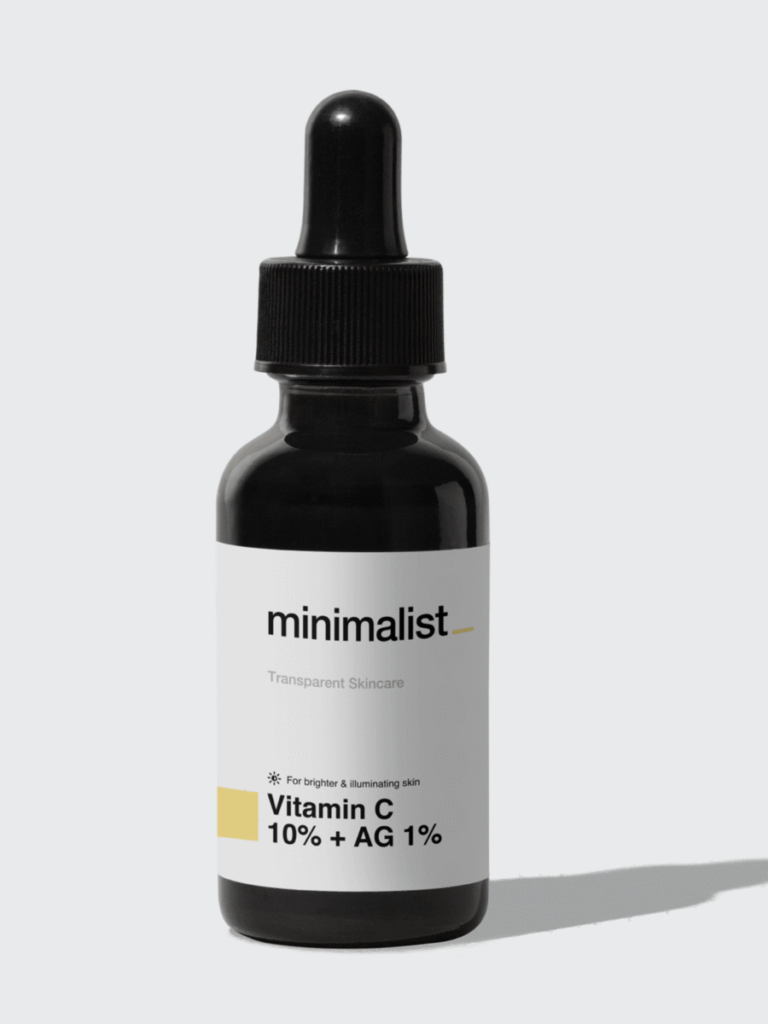
Minimalist Vitamin C serum review

The Minimalist is a spot-on dupe for The Ordinary in India. Everybody knows it! We just said it. Anyways, just because a product is a copy doesn't mean it's not effective. Inspired by their simple one-ingredient formulas, The Minimalist Vitamin C serum is a no-bullshit product that does what it claims. Made with 10% Vitamin C in its purest form of ethyl ascorbic acid, the unique combination of ingredients seeps into the skin, gently exfoliates, lightens the spots, revives dull skin, and instantly hydrates and plumps the skin.

Physical Attributes & Quantitative Measurements:

The serum comes in The Mininamalist's customary black and white packaging with the key ingredients and their percentage mentioned in bold on the top. The glass bottle and dropper are easy to store and use. The instructions mention patting 2-3 drops on freshly washed skin and wait for 1-2 minutes before moisturizing.

There's 30 ml of serum in the bottle and it's priced at Rs.695/-.

Benefits & How It Compares To Others

I think what makes it different from the others is the unique combination of ingredients that hold 10% Vitamin C. The serum is made in Centella water that gently hydrates and soothes the skin.

Next, it also has 1% acetyl glucosamine, a precursor of hyaluronic acid, that plumps the facial skin and helps retain the moisture. Then, there are other humectants (substances that preserve moisture), like ethoxydiglycol, glycerin, xanthan gum, etc. It also has lecithin – a penetration enhancer that helps absorb the product molecules into the skin.

All this – and more – makes the Minimalist's Vitamin C serum in India a favored product among women.

I currently use this serum at night, and follow it up with their Arbutin serum and moisturize with my trusty Embryollise moisturizer. I feel the combination of Vitamin C & Arbutin have worked beautifully to lighten my pigmentation spots, even the skin tone, and give a brighter looking skin.

There's hardly any drawback of the product, except that there are chances it's not 'the one' for you. My overall rating will be 9.5/10 for this budget-friendly Vitamin C serum in India.

Purchase on Amazon here.

#6 Dr. Sheth's Amla VC 20 Vitamin C Serum
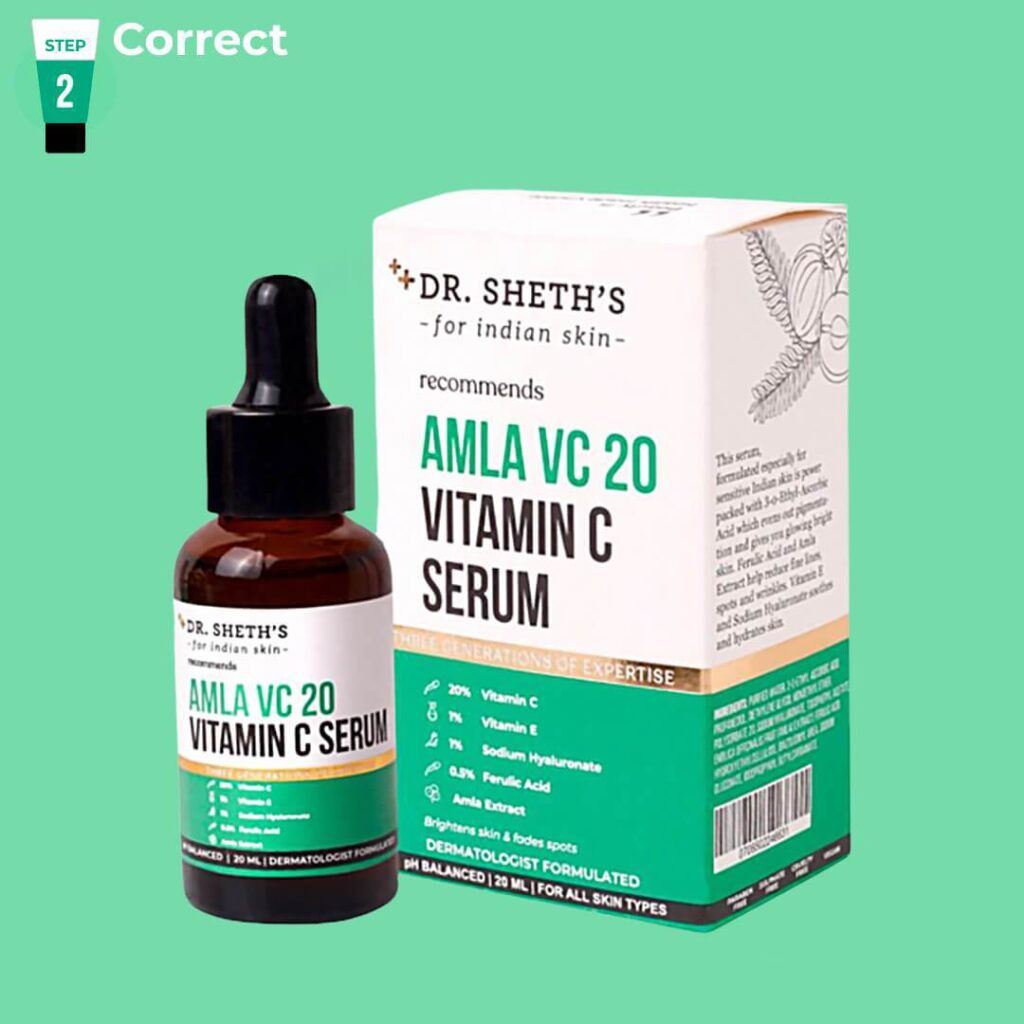
Dr.Sheths Vitamin C serum

Did you know that amla has 20 times more Vitamin C than oranges? Well, the enlightened you will be more impressed to know that Dr. Sheth's Amla VC 20 serum packs the benefits of amla extracts along with Vitamin C in the form of 3-O-Ethyl Ascorbic Acid. The serum contains 20% pure Vitamin C and promotes healthy skin and a radiant complexion.

Physical Attributes & Quantitative Measurements:

The product comes in a sturdy encapsulating packaging system so the integrity stays intact without disturbing the star ingredient so that it keeps on delivering your skin with a healthy dose of nutrients till the last drop. The bottle offers 20 ml of product for Rs.649/-, so it's 10 ml than other products in a similar price range on the list.

Benefits & How It Compares To Others

The 20% Vitamin C is the highest concentration in the serum available and is enough to experience all the magical benefits of the ingredient. At this level, this hero vitamin effectively reduces fine lines and wrinkles, clears up acne, fades sun or pigmentation scars, and brightens the skin tone. Although, there are more skin-loving ingredients infused.

Like ferulic acid, Vitamin E, and sodium hyaluronate. And there's also our Indian kitchen hero Amla extracts, which is proven to be a powerful antioxidant and collagen booster.

I think a downside of this product is the quantity of the pricing. Even though it's formulated uniquely, the cost is a factor to take into account for many. Women on online platforms share my views as well. They have experienced the benefits, no doubt, nonetheless, there are complaints about the cost.

Overall I'd rate this product a 9/10. As I said I haven't tried it yet, but this, along with their Neem & BHA Spot clarifying serum is next on my list.

Purchase on Amazon here.

#7 Kiehl's Powerful-Strength Line-Reducing Concentrate
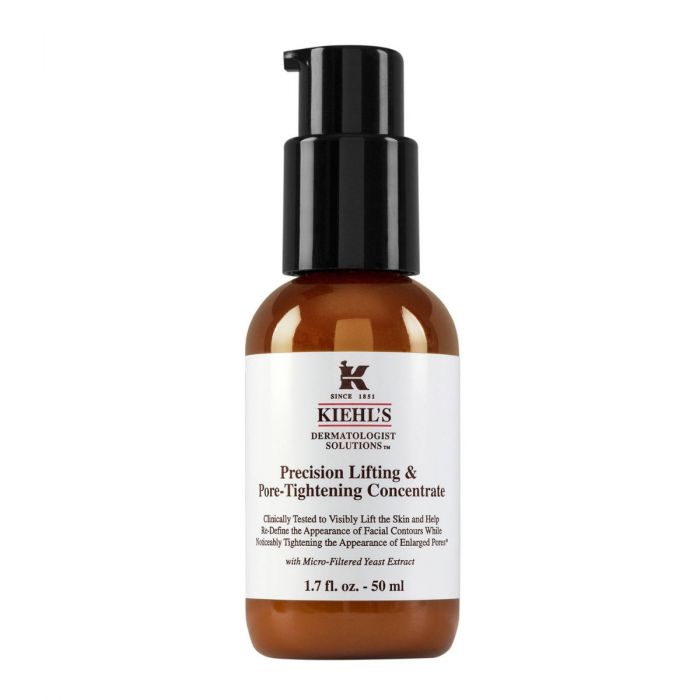
Kiehls Powerful Strength Line Reducing Vitamin C serum India review

A high-end product on this list but totally worth it! Kiehls uses a patented, water-free Vitamin C concentrate in their serum that ensures deeper absorption (up to 10 layers of skin), stability, and effectiveness. I haven't used this personally owing to the hefty price tag, but feel like splurging on it for my birthday. Anyway, it's been widely used & reviewed, so I've some great details for you! Keep reading.

Physical Attributes & Quantitative Measurements:

The serum comes in an orange-colored bottle with a built-in pump, a convenient shift from dropper packaging, and much easier to use. A 50 ml bottle costs Rs.5400/- and will last you for about 5 months. More, if you only use it once a day. Considering it will cost you Rs.1000 a month, we say it's a good investment in a tiny bottle.

Benefits & How It Compares To Others

The Kiehls Powerful-Strength Line-Reducing concentrate has 12.5% Vitamin C and is water-free. In water-based formulas, Vitamin C loses its effectiveness and doesn't do what it claims well.

This distinctive formulation is primarily the reason why the serum shows a noticeable difference in fine lines from one use. And with consistent use, this amazing product is just highly, highly effective.

Another exciting ingredient in the serum is hyaluronic acid, which smooths and plumps up the skin. Despite the name, HA is not an acid, just an incredible light moisturizing agent. With daily use, it boosts the hydration of the skin by preventing it from losing moisture.

Drawback: The formula does contain some essential oils and fragrance components like lemon peel oil and citrus peel oil to add a fruity smell to the product. This can be impressive to some, but for those with allergies and sensitive skin, oils can irritate the skin and the hefty purchase will be money down the drain.

What women are saying:

"This is really worth the money. In a week, my skin is brighter, healthier, and literally looks like someone has put a Snapchat filter over my face. It tingles just a bit, but I glow all morning when I put it on." – says one reviewer on Ulta.com.

"I'm using this to reduce forehead wrinkles and I think it's working. But I'm not really, so 4 stars for now." – says another on the same online beauty store.

I'd like to rate this an 8.5/10. I'll be trying it for sure, because of the standalone potent formula and 88% positive reviews.

Purchase on their website here.

Further Read: 5 Best Tan Removal Scrubs in India For Brides & Grooms

#8 Moms Co Natural Vitamin C Face Serum
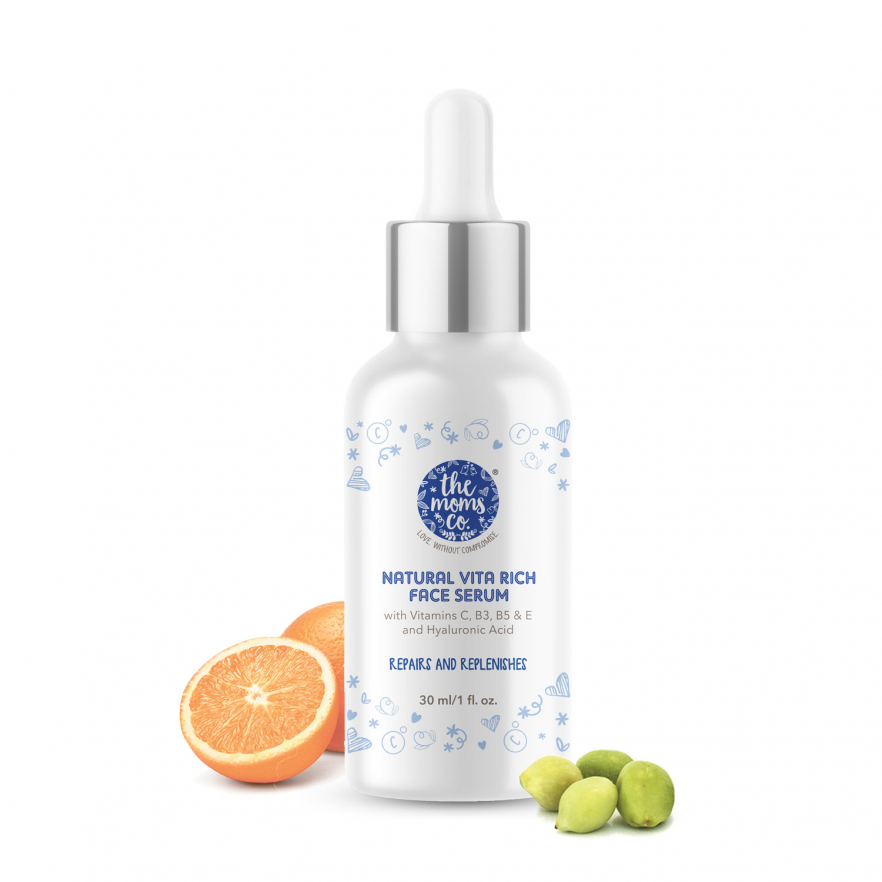
Moms Co best vitamin c serum India

For the price of Rs.500./-, this face serum is an absolute steal. The 'natural' in their product tagline stands true and the ingredients are all derived responsibly to have a gentle, yet visible effect on the facial skin. On their website, you'll find a complete list of ingredients along with quality attestations testifying to their commitment to transparency and customer satisfaction. I happened to try out a bottle too, and it delivered effective results to my dry skin. The lovely product is now a staple in my mom's beauty closet.

Physical Attributes & Quantitative Measurements:

Packed in a white opaque bottle with blue text mentioning product details and a dropper to pick the serum, the container is an ideal one to keep the Vitamin C inside the stable. There's a 30 ml product inside, enough to last you for two months when using both AM and PM. No sample size is available; this is the only size they offer.

Benefits & How It Compares To Others

They have done an excellent job by deriving Vitamin C from Kakadu Plum, the richest botanical source of the vitamin. This is further mixed with hyaluronic acid, a common addition in Vitamin C serums.

Not only that, but it also comes with arbutin – a skin-lightening agent that prevents the formation of melanin. And also chia seed oil, a beautiful fatty oil that retains and imparts skin moisture.

I like that it has a pleasant, mild, fruity smell that fades away easily and doesn't overpower. So it's excellent for those with sensitive olfactory or allergic skin.

What sets this product apart from other Vitamin C serums on the list is the exclusive and potent ingredient formulation, like argan kernel oil, chia seed oil, arbutin, and citric acid.

That being said, it's imperative you follow it up with sunscreen during AM hours, as potent ingredients can lower the skin's pH and can cause irritation in the skin. Even if you're using it during PM, use sunscreen the next day without fail.

Overall, the product is a must-try and worth every penny. It will give you at least some considerable results, as opposed to none. The results will take just a few weeks to show after consistent use.

Rating: 9/10

Purchase on Amazon here.

#9 St.Botanica Vitamin C Serum
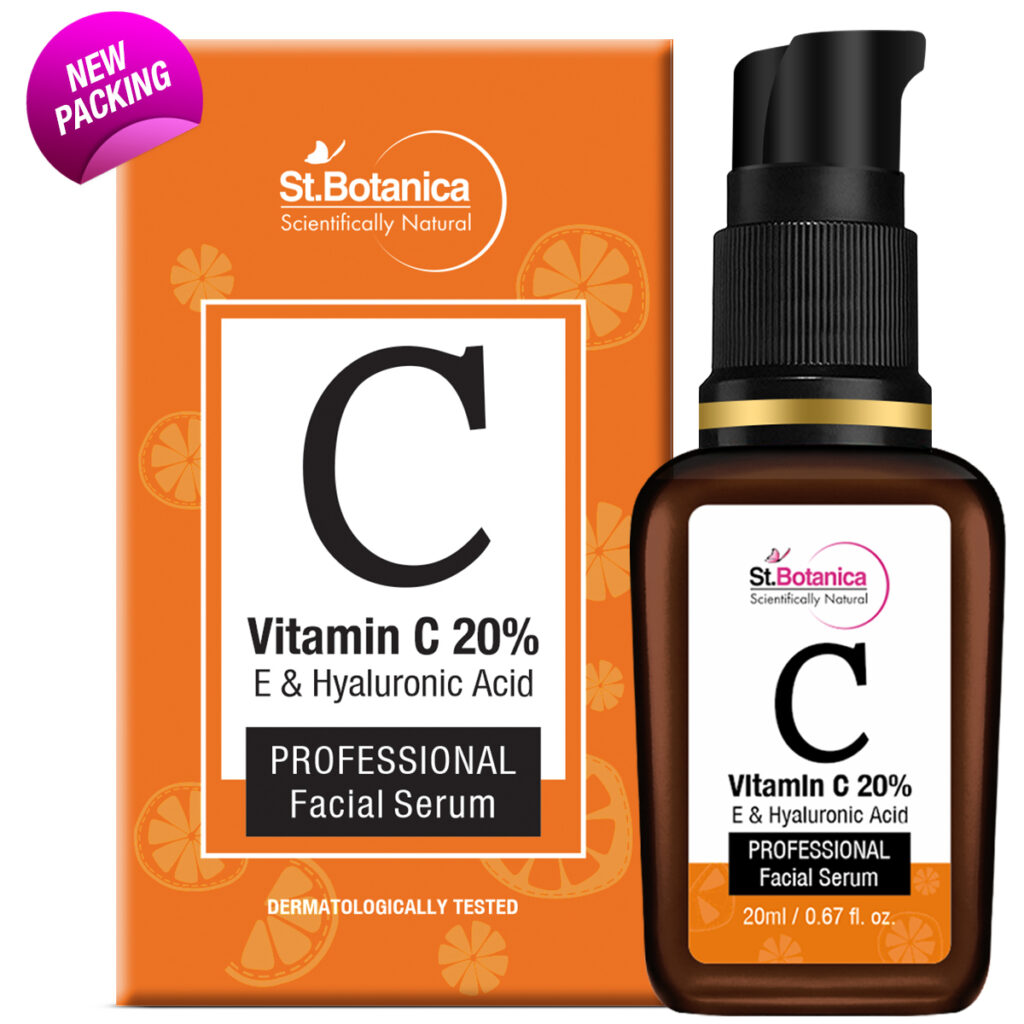
St.Botanica best Vitamin C Serum india

A dermatologically recommended Vitamin C serum in India, St.Botanica has outdone themselves each time I've tried their product. An Indian-based purely natural and organic brand, built on the principles of holistic healing and Ayurveda and part of PETA's beauty without bunnies programs, the company is definitely one of a kind to come across. My favorite among their vast skincare line is Vitamin C micellar cleansing water and 20% Vitamin C serum. They sure know how to work well with the vitamin to impart its benefits to facial skin, and here's a detailed review of their serum to convince you of the same.

Physical Attributes & Quantitative Measurements:

The professional serum comes with a brown, non-transparent bottle with a built-in pump to ensure comfortable product application. The product is priced at Rs.999/- for a 20 ml bottle. So, it's a little higher in the price range than other serums on the list.

Benefits & How It Compares To Others

Despite a high concentration of Vitamin C in the product, 20% of ascorbic acid, this brightening serum is safe for sensitive skin and doesn't cause any irritation. As a beginner, you might notice some tingling, but it will subside as your face becomes used to the potent ingredient.

The reason being the serum is formulated with many calming ingredients that make it safe for beginners to use as well. Some of them being aloe vera, Centella Asiatica, green tree extract, and bergamot essential oil.

The skin feels instantly smooth after application. I must rave; I am impressed with the drastic effects on my face after using it. In just a week, I noticed a decrease in my pigmentation spots on cheeks and a reduction in a few eye wrinkles; although I cannot fully attest well for the latter, because I am young. xD

 The rating for this product is 9.5/10 and I recommend getting your hands on it as soon as you can.

Purchase on Amazon here.

#10 Himalayan Organics Vitamin C Serum
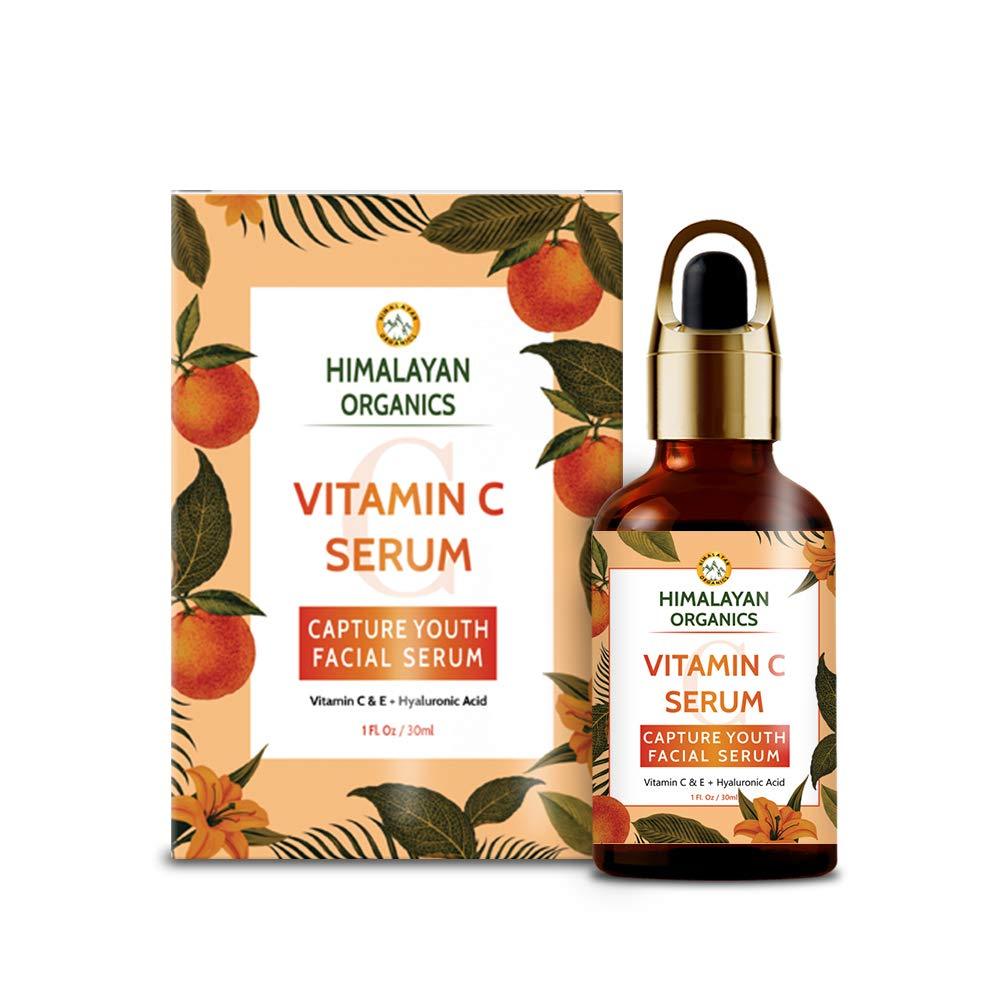
Himalyan Organics vitamin c serum india

The last, but not the least, one on this list is the Himalayan Organics Vitamin C serum. The company is a well-known and trustworthy one in India with crores of people trying and experiencing results with the brand on a daily basis. I'm a religious user of their vitamins, especially Biotin, which has enhanced my hair health well with time. Their Vitamin C serum is next on my list and I'm already excited to try it owing to all the positive reviews of the product.

Physical Attributes & Quantitative Measurements:

The product comes in an airtight container and a dropper bottle that ensures this finicky ingredient stays stable. The whole design is symbolic of a rustic, natural feel – owing to the company's sensible sourcing of products from the bounty of Himalayas. You'll get 30 ml of product for ~ Rs.950/-.

Benefits & How It Compares To Others

This gentle formula for all skin types is developed in partnership with dermatologists, contains Vitamin E and hyaluronic acid along with Vitamin C to restore the skin's protective barrier, infuse it with powerful antioxidants, and improve it over time. The pretty doses of such good ingredients are like an antioxidant triple threat, which your skin will thank you for!

Staying true to their Indian roots, there's also the goodness of ashwagandha, moringa, and Gotu Kala in the product. Ayurvedic ingredients penetrate deep into the skin and take the other ingredients of a product with them. This promises deeper absorption and better nutrient delivery to the skin with topical application of products.

The serum shows effects well within a few weeks of application. Apart from the skin brightening effects, you'll also notice disappearing fine lines and a plumping effect. See what reviewers are saying:

"I am 35, and I can say it reduced the fine lines and pigmentation on my face well. Totally fulfills what it claims and I'll be re-buying in again & again" – says one reviewer on Amazon.

"I have very oily acne-prone skin and this serum didn't irritate my skin at all. In fact, it absorbed beautifully with a gentle massage. I've noticed a decrease in prominence of the fine lines under my eyes and I highly recommend this to all." – says another reviewer on Amazon.

Overall Rating: 9.5/10

Purchase on Amazon here.

FAQ's

Why should one use a Vitamin C serum?

A Vitamin C serum does a lot for your skin – from brightening, lightening the skin tone to protecting it from aging and free radicals. There's a ton of research that proves its effectiveness in topical form and skin doctors all over the world love it as well. Here's one of the doctors talking in brief about what's Vitamin C, how does it help, and which form should you choose to get the most out of the serum.

https://www.youtube.com/watch?v=1kLLEyFeZq8&ab_channel=ShereeneIdriss

Benefits of a Vitamin C serum:

  • A Vitamin C serum hydrates the skin and quenches its thirst for moisture. All because of its ability to strengthen the skin's barrier and prevent transepidermal water loss.
  • A Vitamin C serum reverses the photodamage on the skin. A research study demonstrated considerable improvement (more than 60%) in skin issues like pigmentation, rough skin, and wrinkles after 3 months of regular topical use of a Vitamin C active.
  • A Vitamin C serum brightens your complexion by improving the appearance of dull skin. A 2020 study proved Vitamin C and Vitamin E's radiating skin effect along with improvement of wrinkles in subjects of research.
  • A Vitamin C serum treats dark spots and pigmentation. The ingredient is well-known to block the production of melanin and treats acne spots, blemishes, and uneven skin tone quite effectively.
  • A Vitamin C serum is a powerful antioxidant that is anti-inflammatory and boosts collagen and elastin synthesis. Over time, this results in an increased elasticity for the skin.

At what age should we start using a Vitamin C serum

Your early 20s are probably a great time to start using Vitamin C serum. Between 25 -27, you must make it a part of your skincare routine. What product you want to try depends on what your concerns are, and what suits you. Do ensure a proper moisturizer and sunscreen are a diligent part of your skincare before you start using a Vitamin C serum.

Should You Use A Vitamin C serum every day?

If you're a beginner, don't use it twice a day. Instead, make it a part of your routine slowly. Start out with applying it once on alternate days. Then, move up to once a day. That should be good enough for some, but you can, of course, use it twice a day depending on your concerns. Most dermatologists will recommend daily use in the PM with 3-5 drops massaged on the face & neck area, left on for 5 minutes, before following up with a moisturizer.

Can't we just use Vitamin C infused cream instead of a serum?

No, you can't. Serums are potent formulations that deliver high-quality ingredients directly to your skin while moisturizers just lock in the hydration. Both are created completely differently and cater to distinct facial skin needs. Sure, you can use a moisturizer with Vitamin C as an ingredient, but it won't deliver the same effects as a serum. Both have a separate place in the skincare spectrum and should be treated as the same.

How much concentration of Vitamin C should we use?

For visible results, it's advised to use a concentration of 10% or above. As a beginner, you should start with a 10% solution then move up to 20% or higher as tolerated. The sweet spot can be anywhere between 10% to 20% for you depending on the skin's sensitivity towards the ingredient. Also, don't feel that only a higher concentration will impart the abundance of benefits of Vitamin C. For some, lower is better. And anything higher than 20% doesn't increase any benefits whatsoever.

Conclusion:

That's it for our detailed article on the best Vitamin C serums in India. Before signing off, I'd just like to reveal my favorite from the top 10. It's *drumrolls, please* Minimalist Vitamin C serum. I think the company has done a fab job curating the product with the highest-quality Vitamin C, stabilizing it well, and pricing it reasonably. Not to mention, it delivers all the results Vitamin C is popular for.

Although, while navigating the skincare aisle for Vitamin C, I'd advise you to keep your skin type, concerns, and quality in mind.

Hopefully, this blog answered any question you had about this miraculous product. However, if you have any other queries, feel free to drop them in the comments section below and I'll get back to you sooner than you think. Signing off! xD

Best Vitamin C In India

Source: https://wedbook.in/skincare/best-vitamin-c-serum-in-india/

Share:

Recent Posts

banner